Lord’s Pitch Controversy

England’s clash with Pakistan in the second Test at Lord’s, played from 27 to 30 August, ended in a second consecutive victory for the hosts. Yet throughout the match, it was impossible to ignore the state of the playing surface. Once England had wrapped up the win, the Lord’s pitch controversy quickly became the next major talking point.
Lord’s Pitch Controversy: What Went Wrong at the Venue?
The poor state of the Lord’s pitch was no secret to those responsible for staging international cricket at the ground. The problems had already been evident during England’s Test against New Zealand in June, when some observers described the conditions facing the players as dreadful. Batters had to contend with prodigious seam movement, as well as deliveries that suddenly kept low or reared up unpredictably.
Amid widespread criticism, Marylebone Cricket Club (MCC), which owns Lord’s, even issued an official apology. The International Cricket Council made it clear to the ground’s owners that the existing problems had to be addressed.
Ahead of the Test between England and Pakistan, MCC said that action had been taken to improve the quality of the surface. Independent specialists had been brought in, and they assured the club that solutions had been identified to improve the pitch’s performance. Although the surface did play better than it had in June, not every issue had been ironed out. Uneven and unpredictable bounce, in particular, remained a serious concern.
The Lord’s pitch controversy did not begin in June. The ground’s less-than-perfect reputation for the quality of its playing surface stretches far back into the past, with complaints from players dating as far back as the 19th century. It is therefore clear that the problems at Lord’s run much deeper than one difficult summer.
As for the present day, the whole of the United Kingdom has had to cope with a severe drought this year. However, both Tests played at Lord’s were affected by heavy rainfall. Paradoxically, the rain may actually have helped the ground: without it, the matches would probably have ended even sooner, which would hardly have done the venue’s reputation any favours.
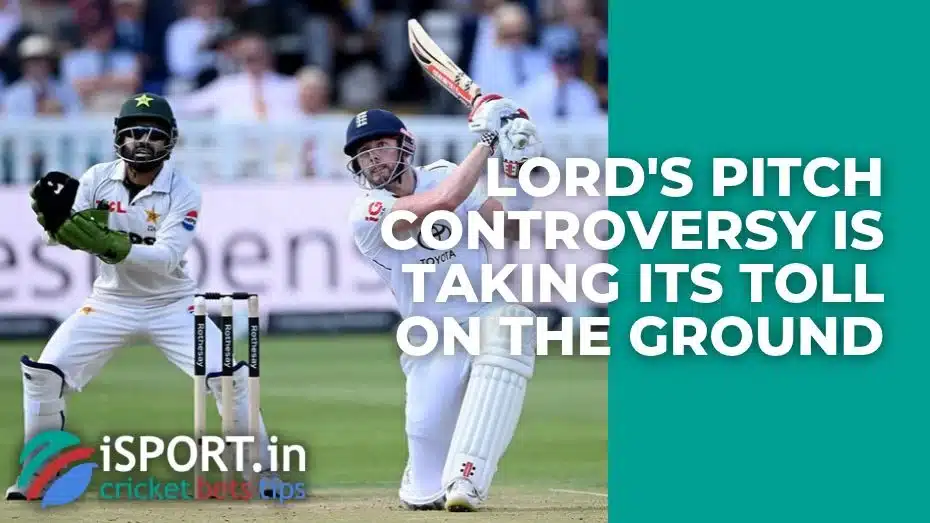
Lord’s Pitch Controversy Is Taking Its Toll on the Ground
Following all these problems, Lord’s missed out on the opportunity to host next year’s ICC World Test Championship final. The right to stage the match was awarded to the Oval instead. For understandable reasons, the England and Wales Cricket Board was unwilling to gamble with such an important fixture.
From an organizational and reputational perspective, losing the final was a significant blow to MCC. Marylebone Cricket Club addressed the situation in a statement:
“Lord’s is not the only ground facing challenges with pitch preparation. MCC has held discussions with colleagues at other venues that have experienced difficulties similar to those we are facing now. A decision has been made to establish an agronomy advisory group consisting of four to six experts with a diverse range of skills and experience. Their task will be to help bring the Lord’s pitch up to the highest possible standard and put an end to the controversy.”
The challenging conditions are also having a noticeable impact on match results. This was the 43rd year in which Lord’s hosted two or more Test matches, but it was the first time that none of the cricketers managed to score a century.
The average batting score at Lord’s in 2026 stands at just 16.57. Compared with previous seasons, that figure is the ground’s lowest since 1958. The condition of the surface undoubtedly played a major part in the decline in scoring. For the first time since 1995, not a single batter earned a place on the Lord’s honours board – and it certainly was not for a lack of talent or effort.
MCC has now made an extremely bold pledge, declaring that it intends not merely to put Lord’s back in order but to turn the ground into a global benchmark for pitch quality and an example for other sporting venues to follow.
The club clearly has its work cut out. However, if it can put together the right group of experts and secure sufficient funding to renovate the playing surface, significant improvements could follow. In time, the ICC World Test Championship final may even return to the “Home of Cricket.”