Does Test cricket need a two-tier system
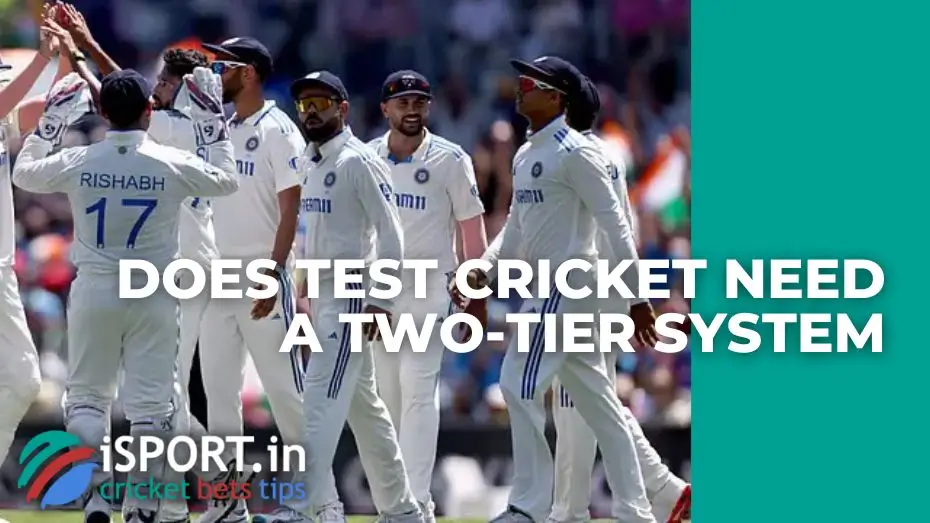
Half-empty stands in Ahmedabad during a Test match are no longer a surprise. West Indies, once the terror of world cricket, have been unable to compete with India for twenty years now. Dry statistics only confirm this depressing state of affairs. Six away defeats in a row, five of them by crushing scores, and they all happened in just three days. Against this backdrop, a reasonable question arose: does Test cricket need a two-tier system?
Ups and Downs: Where is the Real Audience Interest
Just a couple of months before, Indian fans were glued to their screens, watching an incredible five-match battle in England! That series was a veritable feast of cricket: tense finals at Lord’s and the Oval, a hard-fought draw in Manchester and a monumental chase for 371 runs at Headingley. Even in the only match, where England lost by 336 runs, spectators were treated to a furious counter-attack from Harry Brook and Jamie Smith.
But, alas, such matches have become more of an exception, the preserve of select teams. While the rest of the meetings most often turn into predictable and one-sided defeats.
The idea of the World Test Championship (WTC) was supposed to breathe new life into Test cricket. And it worked, but only partially. The matches became more productive, and over the three competitions, three different teams lifted the trophy. But let’s face it: India, England, and Australia are the three pillars of Test cricket. Any of these teams should play each other, and the stadiums are packed and the ratings are through the roof.
Ruthless statistics and the crisis of great teams
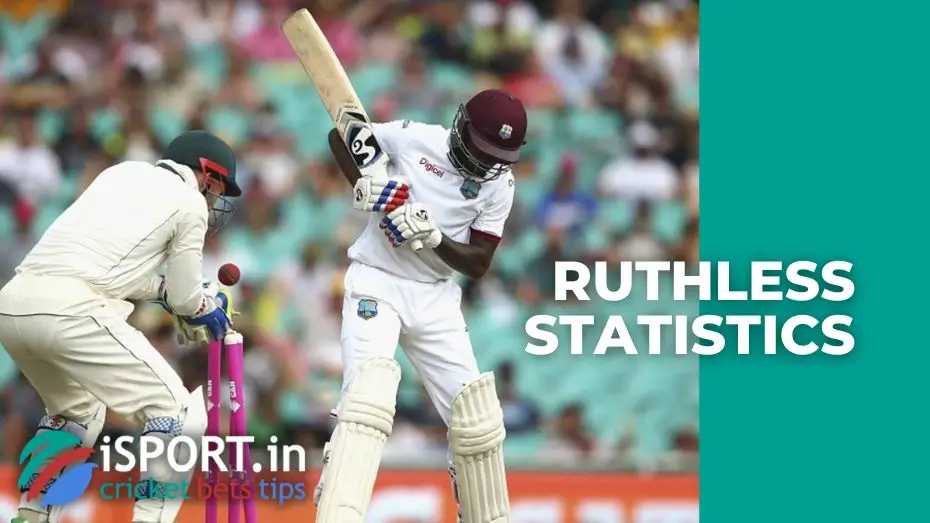
Statistics are merciless. Since the WTC’s launch in 2019, the top six teams (Australia, South Africa, England, India, New Zealand and Sri Lanka) have played 98 matches against the bottom six teams (Pakistan, West Indies, Bangladesh, Ireland, Afghanistan and Zimbabwe). 68 victories for the strongest against 13. The win-loss ratio (W/L) is a staggering 5.23. Twenty of these victories were stoppages with innings defeats.
The situation of once-formidable teams like Pakistan and the West Indies is downright sad. Pakistan, which was recently number one in the world, has slid down since 2016. They haven’t won a single Test in SENA countries (South Africa, England, New Zealand, Australia) since the start of the WTC. And their home defeat to Bangladesh was a sign of their decline.
The West Indies are experiencing a crisis in all formats. Last year’s victory at the Gabba, inspired by Shamar Joseph, seems more like a blip amid a string of failures.
Does Test cricket need a two-tier system or no
So what to do? A two-division system seems to be the answer. Six strongest teams in the Elite League, six in the Second League. With periodic promotions and demotions in class. Weaker teams will play against each other on a more equal terms, which will generate competition and interest. But it’s not that simple.
“We, England, don’t want to hit a losing streak, get relegated to the second division, and lose matches with Australia or India. That simply can’t happen. Common sense must prevail here,” ECB Chairman Richard Thomson recently stated. And it’s understandable! After all, it’s the matches between the Big Three that gave us the most exciting series in recent years.
There is another problem, the glaring disparity in the number of matches. Since 2018, there have been 13 series of four or more Tests, and only one of them didn’t include the Big Three. England and Australia play 5-6 Test matches per series, while New Zealand, the inaugural WTC champions, mostly settle for two-legged matches.
So what’s the bottom line? On the one hand, there’s the need to save Test cricket from dilution and boredom. On the other, there are financial risks and the fear of the strongest losing their gold series. Does Test cricket need a two-tier system? There is no answer yet, but the question is getting louder.