Sri Lanka boosts T20 World Cup security with eye on India-Pakistan clash
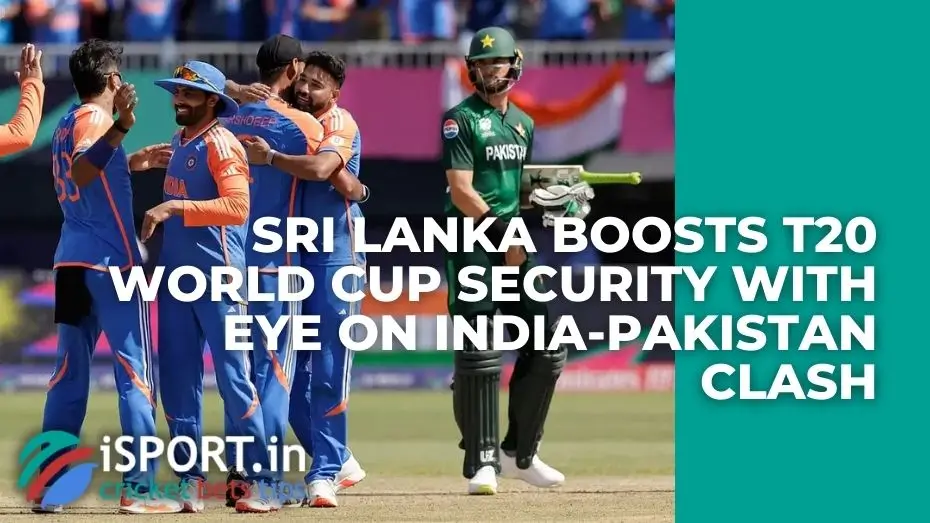
Colombo at night, the stands floodlit by the lights, the roar of tens of thousands of spectators. On the field, there aren’t just two teams, but a whole story. A cricket match between India and Pakistan is always more than just a sport. This is also understood in the country that, together with India, is hosting the T20 World Cup. Sri Lanka boosts T20 World Cup security with eye on India-Pakistan clash. Special preparation is already visible.
Sri Lanka boosts T20 World Cup security with eye on India-Pakistan clash: Elite Units
The island’s authorities have deployed unprecedented security measures. Sri Lanka boosts T20 World Cup security with eye on India-Pakistan clash and it’s not just rank-and-file police officers. The teams’ security was entrusted to elite military units, the same ones usually responsible for the safety of foreign heads of state.
“They will be escorted by armed officers from the moment they leave the airport until they return to the plane,” explained an anonymous government official. This wording speaks for itself: security will be 24/7 and total. Sports Minister Sunil Kumar Gamage has explicitly described security for the India-Pakistan match as a “top priority”.
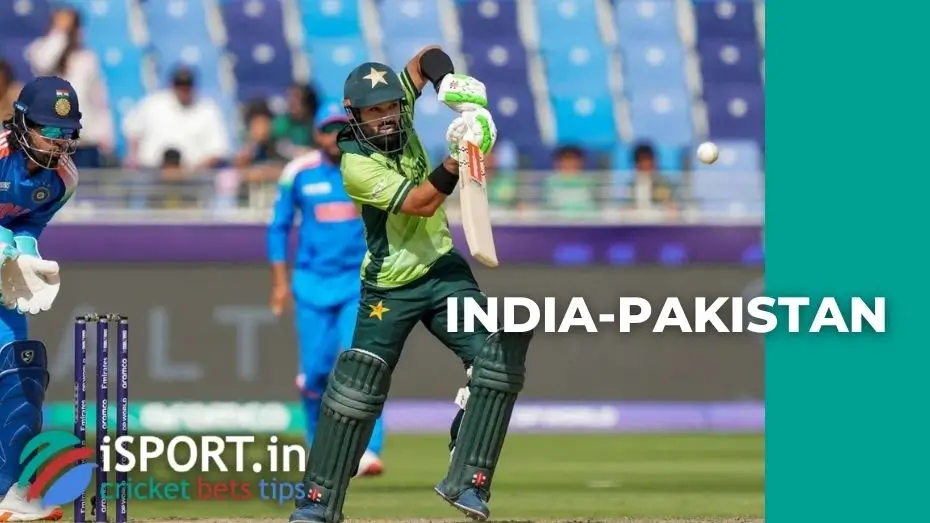
Sri Lanka boosts T20 World Cup security with eye on India-Pakistan clash: Political Background
Why is there such hype around one, albeit fundamental, game? The context, as is often the case on the subcontinent, is far from sporting. India and Pakistan are neighbors whose political relations remain extremely complex. Cricket has long been an arena where these tensions find an outlet.
The situation was further exacerbated by Pakistan’s recent refusal to travel to India for matches. The International Cricket Council (ICC) found a compromise by moving the duo’s games to neutral territory – Sri Lanka. But the worries didn’t end there.
Another controversy arose involving Bangladesh. Their cricket board also refused to send the team to India, citing security concerns. The ICC rejected this request. Bangladesh’s response was harsh — the team was completely withdrawn from the tournament. Scotland was invited to take their place in Group B. And Pakistan, in a show of solidarity, threatened a boycott. The PCB promised to announce the final decision later, after coordinating it with the government.
Against this backdrop, the decision that Sri Lanka boosts T20 World Cup security with eye on India-Pakistan clash looks balanced and perhaps the only possible one for the host country. “We remain neutral in these disputes between India, Pakistan, and Bangladesh. All of them are nations friendly to us,” stated Cricket Board Secretary Bandula Disanayake. This approach is reasonable: instead of getting drawn into regional disputes, Colombo has focused on the practical side of things.
The tournament is also a chance for the island to modernize its infrastructure. For example, new lighting equipment has already been installed at the Singhalese Sports Club stadium in Colombo. The stadium in Pallekele, which survived the devastating cyclone in November without serious damage, is ready to host matches.
The situation resembles preparation for a complex, multi-level operation. On the one hand, there are impeccable logistics and ironclad security, which Sri Lanka, apparently, will provide. On the other hand, there is a fragile political component, where decisions are made far beyond the sporting field.
But when the teams finally take to the field in Colombo on February 15 under the watchful eyes of elite guards, attention will temporarily shift to what’s happening at the wicket. And this, after all, is the spectacle for which it was all started. One can only hope that the main news after the final whistle will be the results of the game, and nothing else.