India Win 1st ODI over South Africa By 17 Runs
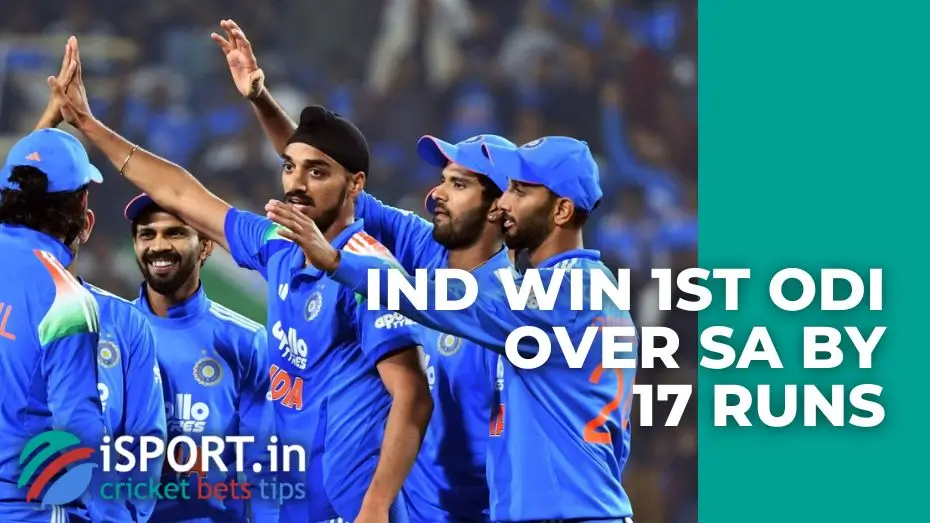
The outcome of the match seemed predetermined. The scoreboard shows 349 runs. India set a monumental total. But cricket rarely follows predictable scripts. What unfolded on the pitch at the JSCA International Stadium Complex in Ranchi was proof: the game isn’t over until the last ball is played. India win 1st ODI over South Africa by 17 runs and it’s a story of tension, resistance, and character.
India Win 1st ODI over South Africa By 17 Runs: classical construction
India win 1st ODI over South Africa by 17 runs and the team that batted first laid the foundation for the success. The early loss of Yasasvi Jaiswal could have added to the jitters. Instead, it became the trigger for a partnership familiar to fans around the world. Rohit Sharma and Virat Kohli took control. Their 136 runs in the second wicket are a classic of the ODI format. Rohit, aggressive and confident, scored 57 off 51 balls, breaking the world record for most sixes. His departure in the 22nd over didn’t stop the advance.
Virat Kohli turned his start into something more. His 135 off 120 balls—his fifty-second century in ODIs—was a masterclass in innings construction. First, careful maneuvering, studying the behavior of the field. After reaching a hundred – controlled aggression. A prime example was an over from Prenolan Subrejan, from which Kohli hit two fours and two sixes, adding 20 runs to his tally.
A partnership with captain KL Rahul (60) added stability in the middle innings. Even a minor collapse in the final overs, when the team lost three wickets in seven balls, couldn’t seriously undermine the result.
India Win 1st ODI over South Africa By 17 Runs: final tension
Young fast bowler Harshit Rana, given his chance, acted without a shadow of a doubt. His first over was a cold shower for the visitors: two wickets, both for zero. Quinton de Kock and Ryan Rickelton were sent out without opening the scoring. Arship Singh quickly maintained the initiative by sending out captain Aiden Markram. 11/3 on the scoreboard after four overs is a situation from which it is difficult to find a way out.
But the South African team refused to capitulate. Matthew Britzky (72) and Tony de Zorzi began the painstaking work of recovery. Their resistance was interrupted by Kuldeep Yadav, who caught Zorzi just before the wicket. However, it was from this moment that the match took on new colours. Marco Jansen entered the field.
His 70-run innings, which took just 39 balls, momentarily turned the logic of the game upside down. Two monstrous sixes from Prasidh Krishna, an attack on Kuldeep himself — the balls flew out of bounds with frightening ease. A half-century in 26 balls—a pace that put India on the defensive. Together with Britzky, he formed a partnership that brought intrigue back into the match.
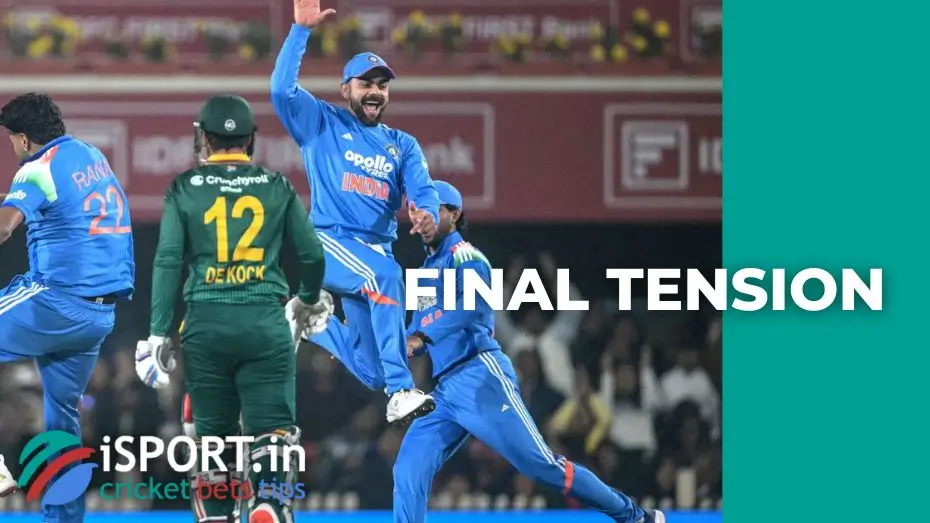
Kuldeep Yadav, who was already under fire, found an answer. His return to attack yielded two key wickets in three balls, Britzky and that same Jansen. This turning point was decisive, although not final. Corbin Boesch (67) took up the baton, continuing to close the gap with cold determination. His play at the end put everyone in the stadium on edge: 38 from 18, then 18 from 6.
India win 1st ODI over South Africa by 17 runs, but the tension of the last over was almost palpable. Bosh, who carried the team’s hopes on his shoulders, sent the second ball from Prasidh Krishna up the over and out of bounds. It was all over. South Africa finished their 50 overs on 332.
The numbers only partially reflect what happened. Behind the scenes, there is silence that follows each of Jansen’s strikes. Or the relieved sigh from the crowd after the final over. The ODI format does not require explosive power at short distances, but the ability to take a hit, adapt and accept pressure.
India win 1st ODI over South Africa by 17 runs. But the main outcome of the match in Ranchi lies beyond the score. South Africa showed their lower order has incredible fighting spirit. India demonstrated its experience and composure to close out even the toughest games.
The next meeting will take place on December 3rd. If it turns out to be even half as unpredictable, the spectators will be in for another test of nerves. After all, cricket, at its core, remains a game where one ball can change everything. And in Ranchi, there were more than a dozen such balls.